「和歌のまち三島」を市内外にPRする三島市観光協会の企画で、三島市立公園楽寿園の駅前口のウッドデッキに、三嶋千句をモチーフにした作品を制作。一般公開が始まりました。9月頃まで公開される予定です。
三島市は、武家歌人東常緑が連歌師宗祇へ古今和歌集の解釈を秘伝として伝授する「古今伝授」を行った地とされます。古今伝授(一度目)の際、東常緑の息子が病気になったため、宗祇が発句「なべて世の風を治めよ神の春」を、三島明神(三嶋大社)に奉納したところ、回復に向かったため、報賽のため、3日間で千句を吟じたと、「宗祇独吟千句(三嶋千句)」の後書きに書かれています。
作品タイトルは仮名序から引用した『よろづの言の葉とぞ』。三嶋千句の中から約40句ほど、神にちなんだ句、春や秋にちなむ句を選び、縦約7メートル、横約5メートルのウッドデッキに配置。蓄光性の素材を使用し、暗くなると文字がぼんやりと浮かび上がります。
よろづの言の葉とぞ
サイズ可変
2025年
Countless leaves of words
Dimensions variable
2025
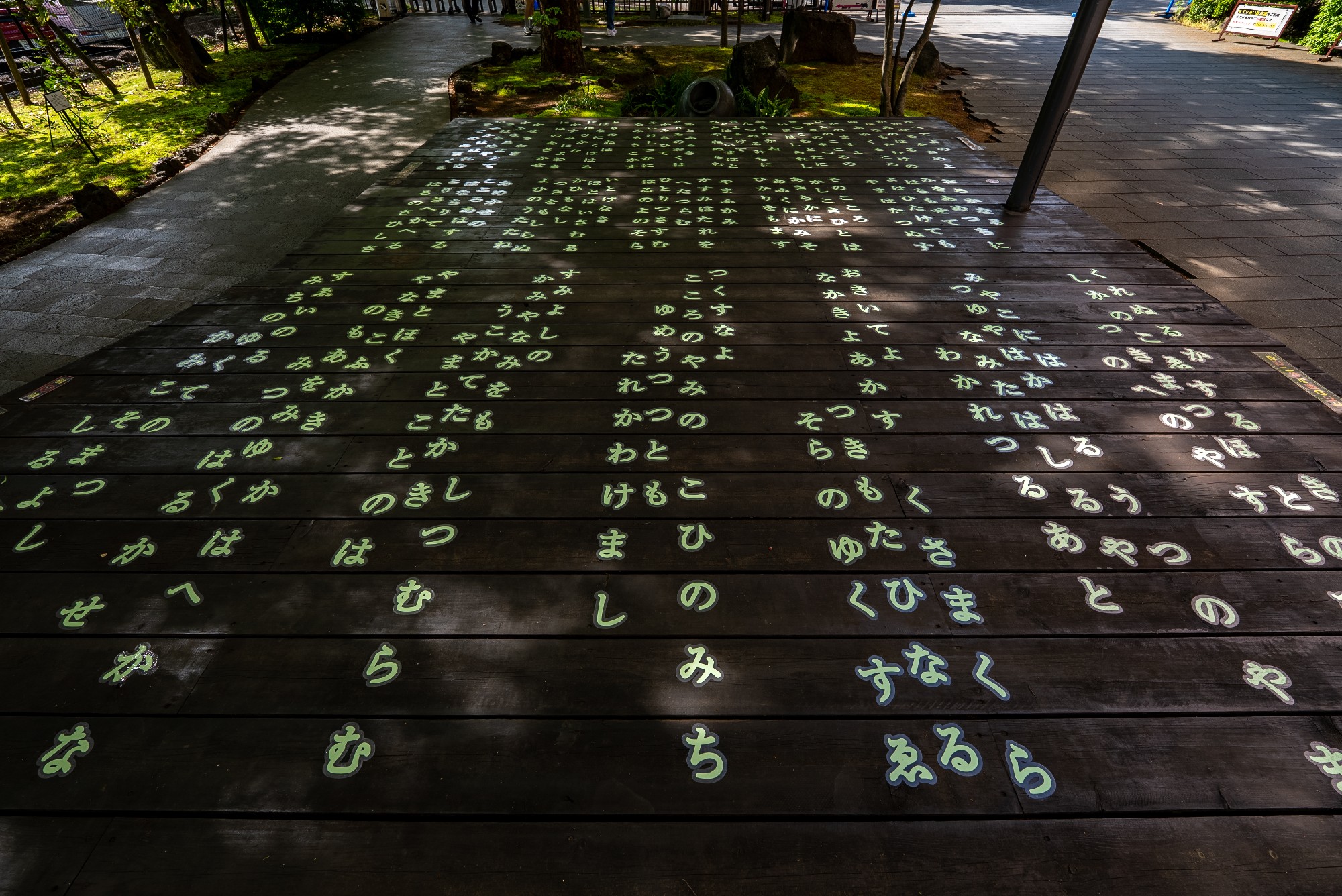


三島市観光協会が主催する企画「古今伝授と三嶋千句」の一環として実施されたコミッションワーク。
三島の玄関口となる市立公園楽寿園の駅前口ウッドデッキに、2025年5月から9月までの間、展示されました。
三嶋千句のうち、展示期間の5月から9月までの季節や、三島にちなんだ句を作家が選定し、ひらがなに変換して一文字ずつウッドデッキに配置。
蓄光性の素材が用いられており、日暮れにぼんやりと光を放ちます。
記紀神話に草木や岩が話すエピソードがあるように、日本には古来より万物に霊性が宿るアニミズム的な世界観、言霊信仰があり、言葉の力が満ち溢れていたことが読み取れます。『古今和歌集』序文の『仮名序』の表現は、そのことを端的に示した内容と言えるでしょう。
和歌の特徴として、整えられた音のつながりが挙げられます。五七五の発句と七七の脇句、長句と短句の交互の構成、掛詞、縁語、枕詞、押韻といった表現技法を通して、凝縮した感情や情景を思い浮べることができます。
ここでは、そのような和歌の持つ特徴が、ひらがなで一文字ずつ適度な距離を保ちながら配置されることで、「見る」という鑑賞行為に置き換えられます。
楽寿園の駅前口ウッドデッキは、駅前の待ち合わせなどで利用される場所。
デッキに配置されたひらがなを何気なく眺めていると、パッと目に留まったひらがなが組み合わさって言葉が浮かび上がります。
音と言が結びつき、人との出会いや街での出来事、記憶と交差しながら、様々な情景が立ち現れることでしょう。
This is an art exhibition held as part of the "Kokin Denju and Mishima Senku" project organized by the Mishima City Tourism Association.
It was exhibited from May to September 2025 on the wooden deck at the station-front entrance of Rakujuen, a municipal park that serves as the gateway to Mishima.
From the Mishima Senku (Mishima Thousand Verses), the artist selected poems associated with Mishima and the seasons spanning the exhibition period from May to September. These verses were converted into hiragana and arranged character by character on the wooden deck. Made with luminescent materials, they emit a faint glow at dusk.
Just as the Kiki myths (the Kojiki and Nihon Shoki) feature episodes where plants and rocks speak, Japan has held an animistic worldview since ancient times in which spirits dwell in all things. Alongside this is the belief in kotodama (the spiritual power of words), illustrating a world once overflowing with the power of language. The expressions found in the Kana-jo (Japanese Preface) of the Kokin Wakashu (Collection of Ancient and Modern Japanese Poetry) can be said to directly represent this concept.
One of the characteristics of waka poetry is its beautifully arranged flow of sounds. Through alternating structures of long and short phrases—such as the 5-7-5 hokku (opening verse) and the 7-7 wakiku (secondary verse)—as well as expressive techniques like kakekotoba (pivot words), engo (associated words), makurakotoba (pillow words), and rhyme, one is able to vividly envision deeply condensed emotions and scenes.
Here, these characteristics of waka are translated into the act of visual appreciation—"seeing"—by arranging the hiragana characters one by one, maintaining an appropriate distance from each other.
The wooden deck at the station-front entrance of Rakujuen is a place frequently used by people meeting up. As you casually gaze at the hiragana scattered across the deck, the characters that suddenly catch your eye begin to combine and form words. As sounds and words connect, intersecting with your encounters with people, events in the city, and personal memories, various scenes will undoubtedly begin to vividly emerge.
古今伝授と三嶋千句
古今和歌集(古今集)は、醍醐天皇の命により作られた、日本で最初の勅撰和歌集です。 古今伝授とは、古今集の解釈(当時は記されていなかった清濁や句読点などを付けた読み方、語義や語釈)を、師から弟子へ秘伝というかたちで、後世へ伝えたものです。
東常緑から宗祇への古今伝授は、二度に分けて行われ、一度目は三島(願成寺)で行われたと言われています。
古今伝授(一度目)の際、東常緑の息子が病気になったため、宗祇が発句「なべて世の風を治めよ神の春」を、三島明神(三嶋大社)に奉納したところ、回復に向かったため、報賽のため、3日間で千句を吟じたと、「宗祇独吟千句(三嶋千句)」の後書きに書かれています。
宗祇がその伝授による講釈の聞書を整理した『古今和歌集両度聞書』の冒頭には、「やまと歌は、人の心を種として、よろづの言の葉とぞなれりける」とあり、和歌の本質を講説されていることがわかります。
Kokin Transmission and the Mishima Senku
The Kokin Wakashū (“Collection of Ancient and Modern Japanese Poetry”) was the first imperially commissioned anthology of waka, compiled by imperial order under Emperor Daigo.The Kokin Transmission (Kokin Denju) refers to the secret oral tradition by which the interpretations of the Kokinshū—including nuances such as voicing, punctuation, and word meanings—were passed from master to disciple.
One of the most renowned transmissions was from Higashibōjō Tokiyuki to Sōgi, which is said to have taken place in two parts, the first in Mishima at Ganjōju-in Temple.
During this first session, Tokiyuki’s son fell gravely ill. Sōgi offered a waka to Mishima Myōjin (the deity of Mishima Taisha), praying for his recovery:"Let the winds of the world be stilled—springtime of the gods."The child recovered, and in gratitude, Sōgi composed one thousand verses over three days—a sequence later known as the Sōgi Dokugin Senku (Mishima Senku), as recorded in its colophon.
At the beginning of Kokin Wakashū Ryōdo Kikigaki—Sōgi’s transcription of the oral commentary—appears the line:"Yamato poetry arises from the seeds of the human heart, and from there, becomes countless leaves of words."This phrase speaks to the essence of waka as a poetic embodiment of emotion, thought, and the ineffable connection between language and life.